
Automation For Scales by Cech
The Real Value Is What Happens to That Number Next.
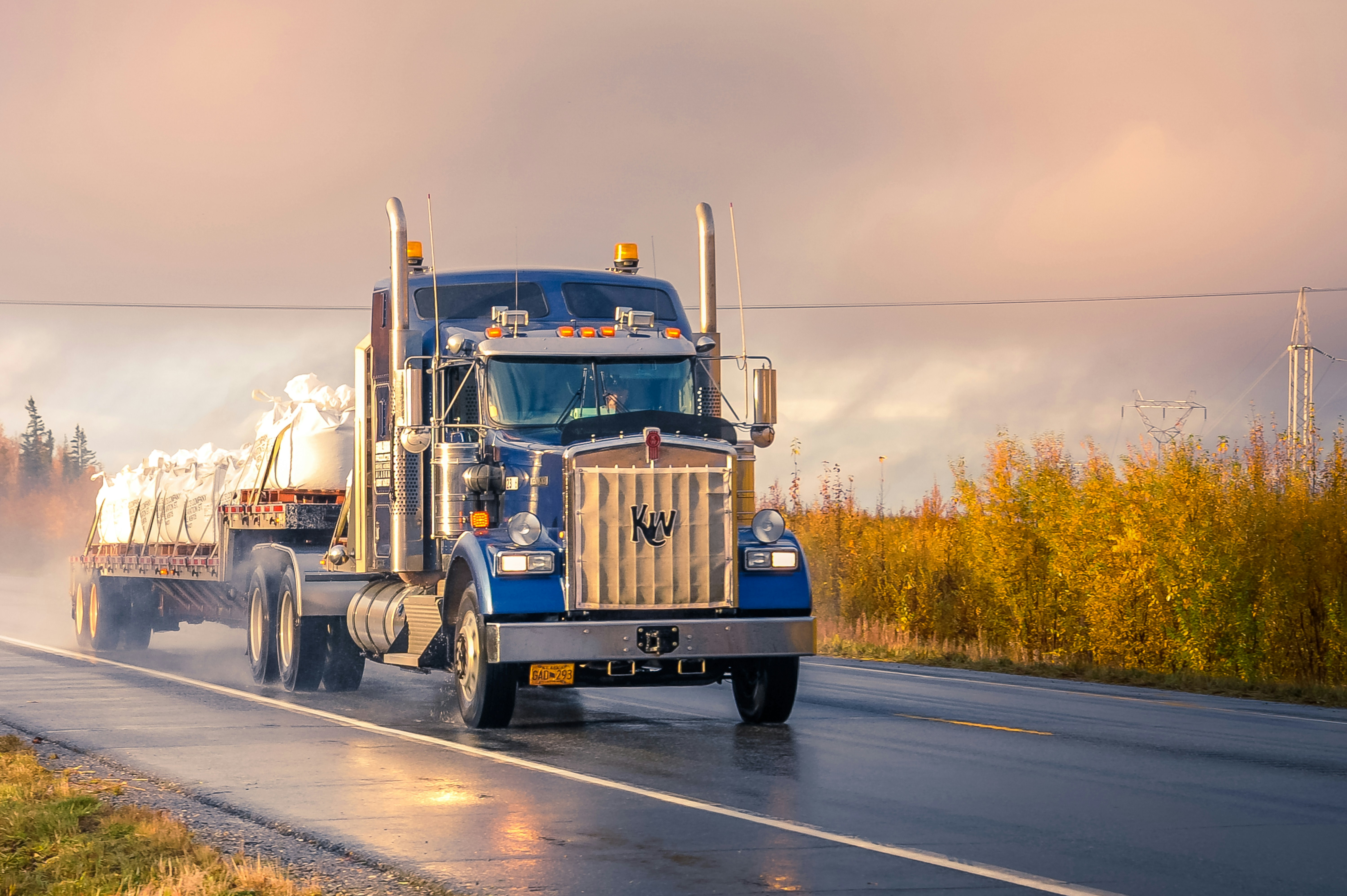
A Scale That Displays a Number Is Only the Beginning.
Industrial weighing began as a simple transaction: place the load, read the display, write down the number. That model worked when production volumes were lower, labor was more available, and the cost of a transcription error or a missed weight was something an operation could absorb. It works less well today, when production environments demand higher throughput, tighter process control, fewer operators per output unit, and documentation standards that require verified, timestamped, attributable weight records at every step of the process.
Automation in weighing doesn't mean replacing the scale — it means extending the value of what the scale already knows. The weight the instrument measures at the moment of measurement is accurate, real-time, and complete. The question is whether that weight stays on the display until an operator writes it down, or whether it flows — automatically, immediately, and without human transcription — into the PLC managing the batch sequence, the MES capturing the production record, the ERP updating inventory, the ticketing system printing the receipt, and the monitoring platform tracking the instrument's health between calibration events.
Cech has been specifying, installing, and integrating weighing systems across Michigan's industrial, agricultural, pharmaceutical, food, chemical, and aggregate sectors for 90 years. In that time, the weighing instrument has evolved from a mechanical beam balance to a networked measurement device with digital outputs, onboard diagnostics, communication protocols, and integration capability that would have been unrecognizable a generation ago. We have evolved with it — and we bring that accumulated expertise to every automation project we take on, whether it's a single unattended kiosk at a grain elevator or a facility-wide weighing automation system integrated into a manufacturing ERP.
What Weighing Automation Actually Looks Like Across Michigan Industry
Weighing automation is not a single technology or a single product category. It is a spectrum of solutions — from simple gate-and-ticket automation at a commercial truck scale to fully integrated process control loops where scale data drives automated material additions, batch sequencing, and production reporting without any operator intervention in the data chain. Cech works across this full spectrum, matching the automation architecture to the operational requirements, the production environment, and the existing system infrastructure of each specific application.
Unattended Weigh Stations and Automated Ticketing
Unattended weigh station automation replaces the scale house attendant with an integrated system that handles driver identification, tare and gross weight capture, ticket generation, and gate control automatically. Drivers are identified through RFID card or fob, PIN entry, barcode scanning, or license plate recognition cameras. The system retrieves the vehicle's stored tare, manages the weighing sequence through the driver interface at the kiosk, generates a printed or electronic ticket with full transaction details — gross, tare, net, commodity, time, date, vehicle identification — and controls the entry and exit gates based on the transaction outcome.
The operational value of unattended automation extends beyond labor cost reduction. It extends operating hours to 24/7 without staffing costs. It eliminates the ticketing errors and transaction delays that come from manual processing. It captures a complete electronic record of every transaction without transcription. And for high-volume operations — quarries, grain elevators, transfer stations, recycling yards — it processes vehicles at a rate that staffed operations struggle to match during peak periods. Cech designs and installs unattended weigh station systems for Michigan commercial operations across industries, with vehicle identification, gate control, and back-end data integration configured for each facility's specific operational workflow.
PLC Integration: Weighing in the Automated Control Loop
When a scale is integrated into a Programmable Logic Controller (PLC) system, weight data becomes a real-time input to the automated control sequence — triggering events, verifying additions, stopping processes, and advancing batch steps based on verified weights rather than timers or operator confirmation. This is the foundation of automated batching, automated filling, and automated loss-in-weight feeding: the PLC knows what the scale is reading at all times, and the control program uses that information to manage the process.
Cech designs PLC-integrated weighing systems primarily around Rockwell Automation (Allen-Bradley) ControlLogix and CompactLogix platforms and Siemens S7 and TIA Portal environments — the PLC platforms most common in Michigan manufacturing. For Allen-Bradley applications, we utilize Add-On Profiles (AOPs) that allow weighing indicators and digital load cell systems to be imported directly into Studio 5000 as recognized devices, providing native access to scale parameters — current weight, zero condition, overload status, individual load cell data from digital systems — within the PLC program without custom communication block development. For Siemens environments, we work with PROFINET device integration and function block libraries that accomplish the same result within the TIA Portal programming environment.
PLC integration architectures Cech implements include discrete I/O for simple go/no-go weight verification, analog output for continuous weight signal to PLC analog input cards, and digital serial or Ethernet communication for full bidirectional data exchange — allowing the PLC not only to read weight but to command tare operations, request calibration status, and receive diagnostic data from intelligent weighing terminals and digital load cell networks.
Automated Batching and Recipe Control Systems
Automated batching combines PLC control with recipe management to guide the batch sequence — selecting the target weight for each addition from a recipe database, commanding the weighing system to monitor and confirm each addition, verifying the result against the tolerance before advancing to the next step, and capturing the as-weighed data in an electronic batch record. The result is a batch process that executes the recipe consistently regardless of operator attention, shift change, or production pace — because the system is managing the weights, not the operator.
Cech designs automated batching systems for food and beverage manufacturers, chemical processors, pharmaceutical facilities, adhesive and coating producers, rubber compounders, and any manufacturing operation where recipe accuracy is the foundation of product consistency. The scope of each project includes weighing instrument specification and calibration, PLC programming for the batching sequence, recipe database design and configuration, operator interface development for the HMI at the batching station, and integration of the batch record output with the customer's quality management system or ERP.
For multi-ingredient batching applications with both major and micro-ingredient additions, Cech designs systems that route different addition types to the appropriate scale for each weight range — major additions to high-capacity floor or hopper scales, minor additions to precision bench scales, micro-additions to analytical or semi-micro instruments — with the PLC managing the routing and the batch record capturing the verified weight from each instrument at each step. This multi-scale batching architecture delivers the accuracy appropriate to each addition weight without compromising throughput at any stage of the sequence.
In-Motion and Dynamic Weighing Systems
In-motion weighing systems capture weight data from moving loads — vehicles driving across a truck scale, packages moving along a conveyor, rail cars rolling across a track scale — without requiring the load to stop for measurement. The enabling technology is high-speed digital signal processing that extracts a stable weight reading from the dynamic load signal during the brief period the load is on the weighing platform.
For truck scales, in-motion weigh-in-motion (WIM) technology allows vehicles to cross the scale at low speed — typically 2 to 5 mph — and receive a weight that is accepted for most operational purposes and, with appropriate system certification, for commercial transaction purposes. WIM dramatically increases throughput at high-volume facilities: a truck that stops, stabilizes, and clears a conventional truck scale occupies it for 60 to 90 seconds. A WIM transaction at 3 mph occupies it for 10 to 15 seconds, increasing potential throughput by a factor of four to six.
For conveyor and packaging line applications, in-motion checkweighing uses electromagnetic force restoration (EMFR) or high-speed strain gauge load cell technology to weigh individual packages or product units at production line speed — 60 to 600 units per minute depending on product weight and line configuration — with accuracy sufficient to support go/no-go verification against declaration weight tolerances. Cech designs and calibrates in-motion checkweighing systems for food and beverage packaging lines, pharmaceutical dose verification, and any production application where 100% in-line weight verification is required.
Belt Scale Automation and Continuous Process Weighing
Belt scales and weigh feeders provide continuous mass flow measurement and control for material conveying and feeding applications — measuring tons per hour of aggregate on a conveyor, controlling the feed rate of polymer pellets into an extruder, managing the inclusion rate of ingredients into a continuous mixing process. Automation at the belt scale level means closed-loop feed rate control: the weighing system continuously measures actual mass flow, compares it to the target rate commanded by the process control system, and adjusts the feeder speed or gate opening to maintain the target rate in real time.
Loss-in-weight (LIW) feeders are the most accurate implementation of gravimetric feed rate control: the feeder continuously weighs its material supply and controls the discharge rate by monitoring the rate of weight decrease. LIW feeders maintain feed rate accuracy even as material bulk density varies — a common occurrence with powders and granules that can pack, aerate, or bridge — because the control variable is actual weight loss rate, not volumetric flow estimation. Cech specifies, integrates, and calibrates LIW feeder systems for Michigan manufacturing and processing applications, including the verification calibration that confirms the feeder is delivering what the control system commands.
Digital Load Cell Networks and Onboard Diagnostics
Digital load cell systems — where each load cell converts its signal to a digital output at the cell and transmits it over a communications bus — provide the hardware foundation for the most capable automated weighing systems. Because the indicator can read each cell individually, it can monitor load cell health in real time, detect imbalance between cells that indicates a developing mechanical problem, and transmit per-cell diagnostic data to remote monitoring systems or PLC programs that include scale health in their operational status displays.
Rice Lake's iQube2, Mettler-Toledo's POWERCELL, and similar digital load cell network architectures provide the individual cell visibility that enables predictive rather than reactive scale maintenance. Cech specifies digital load cell systems for high-criticality weighing applications — truck scales at high-volume commercial operations, process weighing systems where downtime is expensive, pharmaceutical and food production scales where calibration integrity is a regulatory requirement — and integrates the diagnostic data stream into remote monitoring platforms and PLC programs where appropriate.
Remote Monitoring and Predictive Maintenance
Cech's connected smart diagnostics platform extends the automation concept from the production process to the scale maintenance program itself. IoT-connected monitoring hardware installed at the scale reads load cell health parameters — output balance, zero-point stability, excitation voltage, temperature — continuously and transmits them to a cloud-based monitoring platform. Threshold alerts notify both the customer's operations team and Cech's service dispatch when parameters indicate developing issues, enabling proactive service dispatch before the issue reaches the point of calibration failure or equipment downtime.
For operations with preventive maintenance plans at the Premium tier, remote monitoring is standard. For other operations, monitoring hardware can be added to existing scale installations without replacement of the scale itself — adding the intelligence layer to equipment that is already performing well mechanically. The result is the closest thing available to a self-monitoring scale: an instrument that watches its own performance, compares it to established baselines, and generates a service request when the deviation exceeds the threshold that experience says precedes a problem.
RFID, License Plate Recognition, and Vehicle Identification Systems
Vehicle identification systems are the front end of the automated transaction workflow at commercial truck scales and weigh stations. RFID systems use passive or active transponders assigned to specific vehicles or drivers, read at range as the vehicle approaches the scale, to trigger the transaction sequence without driver interaction. License plate recognition (LPR) cameras use optical character recognition to identify vehicles by their license plate — enabling automatic identification of known vehicles without requiring a physical transponder, and capturing plate images for transaction records and security documentation.
For high-volume operations with repeat customers — grain elevator producers, quarry haul contractors, transfer station regular accounts — RFID or LPR identification eliminates the driver interaction step entirely for known vehicles, reducing transaction time and removing a point of operator input from the data chain. For new or occasional vehicles, the kiosk interface manages the identification and tare establishment workflow. Cech designs and installs vehicle identification systems as components of complete automated weigh station projects, including the database management infrastructure that maintains vehicle records, tare weights, and account information.
Cech's Automation Capability Across Industries
- Unattended weigh kiosks: RFID/LPR identification, gate control, ticket printing, ERP integration for quarries, elevators, scrap yards, transfer stations, and recycling facilities
- PLC integration: Allen-Bradley EtherNet/IP and AOP, Siemens PROFINET, Modbus TCP/RTU — weighing data in the automated control loop
- Automated batching: multi-scale recipe management, electronic batch records, go/no-go verification, food/pharma/chemical/manufacturing applications
- In-motion truck weighing: WIM systems for high-throughput commercial vehicle weighing at quarries, transfer stations, and distribution facilities
- In-line checkweighing: EMFR and strain gauge dynamic systems, rejection automation, SPC data capture for food, beverage, and pharmaceutical packaging
- Belt scale automation and LIW feeding: closed-loop gravimetric feed rate control for aggregate, food, chemical, and manufacturing process applications
- Digital load cell networks: iQube2, POWERCELL, and bus-architecture systems with per-cell diagnostics and PLC/MES integration
- Remote monitoring and predictive maintenance: IoT-connected load cell health monitoring, threshold alerts, and proactive service dispatch
- MES and EBR integration: electronic batch record population from scale data for GMP pharmaceutical and food manufacturing compliance
- ERP integration: SAP, Oracle, Microsoft Dynamics, Epicor — inventory transactions, production orders, and yield reporting from verified scale data
- RFID and LPR vehicle identification: automated transaction initiation for repeat-customer commercial weighing operations
Our Quality Guarantee
At Cech Scale, three generations of German precision and decades of field experience guide every install, calibration, and repair. When our name goes on the work, it carries that lineage, sets the standard we live by, and stands as a promise to perform today and for years to come.
.png)


